Imagining Meeting Alien Life: First Contact

unitedfnafans.org – The concept of first contact with extraterrestrial life has long fascinated humanity, sparking endless speculation and debate. From science fiction to serious scientific inquiry, the idea of encountering alien life forms has been a recurring theme in human culture. In this article, we explore the various scenarios and implications of making first contact with extraterrestrial beings.

The Scientific Perspective

Astronomers and scientists have been searching the cosmos for signs of extraterrestrial life for decades. Projects like SETI (Search for Extraterrestrial Intelligence) use radio telescopes to listen for signals from intelligent civilizations. The discovery of exoplanets in habitable zones around other stars has further fueled the hope that we might not be alone in the universe.

The Cultural Impact

First contact with alien life would undoubtedly have a profound impact on human culture and society. It could challenge our understanding of life, our place in the universe, and even our religious beliefs. The way we perceive ourselves and our future could be dramatically altered by such an encounter.

The Ethical Considerations

If we were to make first contact, a host of ethical questions would arise. How should we approach these beings? What rights do they have? Should we share our technology and knowledge with them, or keep it to ourselves? The answers to these questions would require careful consideration and international cooperation.

The Possible Scenarios

There are numerous ways in which first contact could occur. It might be through the detection of an alien signal, the discovery of microbial life on another planet, or even a direct encounter with an extraterrestrial spacecraft. Each scenario presents its own set of challenges and opportunities.

The Role of Diplomacy

In the event of first contact, diplomacy would play a crucial role. Establishing communication and understanding with an alien civilization would require patience, respect, and a willingness to learn from each other. The United Nations and other international bodies would likely play a key role in managing such interactions.

Conclusion

While the prospect of making first contact with alien life remains speculative, it is a possibility that we must prepare for. By considering the scientific, cultural, ethical, and diplomatic aspects of such an encounter, we can ensure that we are ready to meet this monumental moment with wisdom and grace. The search for extraterrestrial life continues, and with it, the dream of one day shaking hands with the stars.
Advanced Concepts from Beyond: Alien Technology

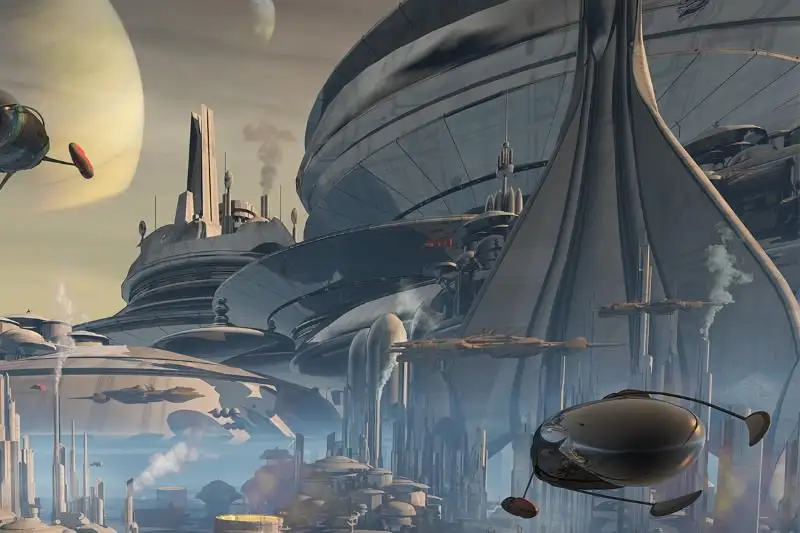
unitedfnafans.org – The allure of alien technology has long fascinated humanity, sparking the imagination of scientists, writers, and dreamers alike. The concept of extraterrestrial civilizations possessing advanced technology far beyond our own has been a staple in science fiction and a topic of serious scientific inquiry. While concrete evidence of alien technology remains elusive, the theoretical exploration of such concepts can inspire new avenues of research and innovation on Earth. In this article, we will delve into the advanced concepts that could potentially define alien technology, drawing from scientific speculation, theoretical physics, and the realms of science fiction.

  1. Propulsion and Space Travel:
    One of the most intriguing aspects of alien technology is the potential for advanced propulsion systems that could allow for interstellar travel. Theoretical concepts such as the Alcubierre drive propose a method of moving faster than light by contracting space in front of a spacecraft and expanding it behind, effectively allowing the ship to ride a wave through space-time. Another concept is the manipulation of dark energy or the use of exotic matter to propel spacecraft to incredible speeds.
  2. Energy Manipulation:
    Alien civilizations might have mastered the art of energy manipulation, harnessing the power of their stars or tapping into the vast energy of black holes. The concept of a Dyson Sphere, a hypothetical megastructure that could encompass a star and capture a large percentage of its power output, is one such example. Advanced energy technologies could also involve zero-point energy, which is theorized to be extractable from the vacuum of space itself.
  3. Quantum Computing and Communication:
    Quantum mechanics could be the foundation of alien technology, with advanced civilizations utilizing quantum computing for unparalleled processing power. Quantum entanglement might be used for instantaneous communication across vast distances, bypassing the speed of light limitations that currently bind our understanding of the cosmos.
  4. Biotechnology and Genetic Engineering:
    Alien technology might include sophisticated biotechnology and genetic engineering, allowing for the creation of custom life forms or the enhancement of existing ones. This could lead to symbiotic relationships between technology and biology, with organisms and machines merging in ways that are difficult for us to comprehend.
  5. Matter Replication and Nanotechnology:
    The ability to replicate matter or use nanotechnology to manipulate materials at the atomic level could be a hallmark of alien technology. This would enable the construction of complex structures with ease, the repair of objects and organisms at a microscopic scale, and the potential for self-replicating machines.
  6. Environmental Engineering:
    Advanced civilizations might have the technology to terraform planets, altering entire worlds to suit their needs. This could involve controlling weather patterns, altering atmospheric compositions, and even adjusting a planet’s orbit to create a habitable environment.
  7. Consciousness and Artificial Intelligence:
    The integration of consciousness with technology or the creation of advanced artificial intelligence could be another facet of alien technology. This might lead to the emergence of post-biological civilizations where the distinction between organic beings and machines blurs.

Conclusion:
While the existence of alien technology remains speculative, the exploration of these advanced concepts challenges our understanding of physics, biology, and the potential future of human technology. The pursuit of such ideas not only fuels our curiosity about the cosmos but also drives us to push the boundaries of our own scientific and technological capabilities. As we continue to search for extraterrestrial life and ponder the mysteries of the universe, the dream of encountering alien technology remains a powerful catalyst for human innovation and exploration.