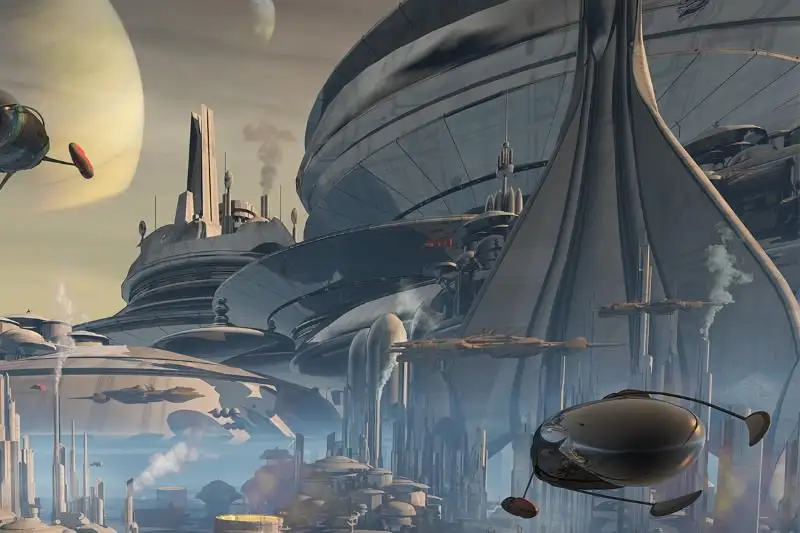
Advanced Concepts from Beyond: Alien Technology

unitedfnafans.org – The allure of alien technology has long fascinated humanity, sparking the imagination of scientists, writers, and dreamers alike. The concept of extraterrestrial civilizations possessing advanced technology far beyond our own has been a staple in science fiction and a topic of serious scientific inquiry. While concrete evidence of alien technology remains elusive, the theoretical exploration of such concepts can inspire new avenues of research and innovation on Earth. In this article, we will delve into the advanced concepts that could potentially define alien technology, drawing from scientific speculation, theoretical physics, and the realms of science fiction.

  1. Propulsion and Space Travel:
    One of the most intriguing aspects of alien technology is the potential for advanced propulsion systems that could allow for interstellar travel. Theoretical concepts such as the Alcubierre drive propose a method of moving faster than light by contracting space in front of a spacecraft and expanding it behind, effectively allowing the ship to ride a wave through space-time. Another concept is the manipulation of dark energy or the use of exotic matter to propel spacecraft to incredible speeds.
  2. Energy Manipulation:
    Alien civilizations might have mastered the art of energy manipulation, harnessing the power of their stars or tapping into the vast energy of black holes. The concept of a Dyson Sphere, a hypothetical megastructure that could encompass a star and capture a large percentage of its power output, is one such example. Advanced energy technologies could also involve zero-point energy, which is theorized to be extractable from the vacuum of space itself.
  3. Quantum Computing and Communication:
    Quantum mechanics could be the foundation of alien technology, with advanced civilizations utilizing quantum computing for unparalleled processing power. Quantum entanglement might be used for instantaneous communication across vast distances, bypassing the speed of light limitations that currently bind our understanding of the cosmos.
  4. Biotechnology and Genetic Engineering:
    Alien technology might include sophisticated biotechnology and genetic engineering, allowing for the creation of custom life forms or the enhancement of existing ones. This could lead to symbiotic relationships between technology and biology, with organisms and machines merging in ways that are difficult for us to comprehend.
  5. Matter Replication and Nanotechnology:
    The ability to replicate matter or use nanotechnology to manipulate materials at the atomic level could be a hallmark of alien technology. This would enable the construction of complex structures with ease, the repair of objects and organisms at a microscopic scale, and the potential for self-replicating machines.
  6. Environmental Engineering:
    Advanced civilizations might have the technology to terraform planets, altering entire worlds to suit their needs. This could involve controlling weather patterns, altering atmospheric compositions, and even adjusting a planet’s orbit to create a habitable environment.
  7. Consciousness and Artificial Intelligence:
    The integration of consciousness with technology or the creation of advanced artificial intelligence could be another facet of alien technology. This might lead to the emergence of post-biological civilizations where the distinction between organic beings and machines blurs.

Conclusion:
While the existence of alien technology remains speculative, the exploration of these advanced concepts challenges our understanding of physics, biology, and the potential future of human technology. The pursuit of such ideas not only fuels our curiosity about the cosmos but also drives us to push the boundaries of our own scientific and technological capabilities. As we continue to search for extraterrestrial life and ponder the mysteries of the universe, the dream of encountering alien technology remains a powerful catalyst for human innovation and exploration.

How Technology is Revolutionizing Romance: In the Digital Age

In the era of smartphones, social media, and dating apps, the landscape of love and romance has undergone a profound transformation. The digital age has not only altered the way we communicate but has also redefined the dynamics of romantic relationships. From swiping right to virtual dating, technology has become an integral part of the romantic journey, offering both opportunities and challenges. This article explores how technology is changing the face of love in the 21st century.

The Rise of Online Dating

One of the most significant changes in the realm of romance is the rise of online dating platforms. Gone are the days of traditional matchmaking or serendipitous encounters in coffee shops. Today, singles can browse through potential partners with a few taps on their screens. Apps like Tinder, Bumble, and Hinge have become the new matchmakers, using algorithms to connect people based on their preferences, interests, and even political views.

Pros and Cons of Digital Romance

The digital age has made it easier to meet people outside of one’s immediate social circle, breaking down geographical barriers and expanding the dating pool exponentially. However, this convenience comes with its own set of challenges. The sheer volume of options can lead to decision fatigue and a disposable attitude towards potential partners. Additionally, the authenticity of online interactions is often questioned, as people may present an idealized version of themselves.

Communication in the Age of Texts and Emojis

Technology has also transformed the way couples communicate. While love letters and landline phone calls were once the norm, today’s lovers rely on text messages, instant messaging, and video calls. These platforms allow for constant contact, which can foster a sense of closeness and security. However, the nuances of face-to-face communication can be lost in translation, and misunderstandings can arise from misinterpreted texts or emojis.

Social Media: A Double-Edged Sword

Social media platforms like Instagram, Facebook, and Twitter have become integral to modern romance. They offer a glimpse into a person’s life before even meeting them, allowing individuals to curate an image that may attract potential partners. However, the pressure to maintain a perfect online persona can be stressful, and social media can also be a breeding ground for jealousy and mistrust.

Virtual Reality and Augmented Reality

As technology advances, virtual reality (VR) and augmented reality (AR) are beginning to play a role in romance. VR dating simulators and AR experiences are providing new ways for couples to interact and explore relationships in virtual environments. While these technologies are still in their infancy, they offer exciting possibilities for the future of dating and long-distance relationships.

The Impact on Long-Distance Relationships

Technology has been a game-changer for couples in long-distance relationships. Video calls, instant messaging, and social media have made it possible to maintain a close connection despite the physical distance. Apps like Couple and Between offer features designed specifically for couples, such as shared calendars and private photo albums, making it easier to stay connected.

Conclusion

Love in the digital age is a complex blend of convenience, connectivity, and challenges. While technology has opened new doors for romance, it has also introduced new obstacles. The key to navigating love in the digital age is to strike a balance between leveraging technology for its benefits and preserving the authenticity and depth of human connection. As we continue to evolve in this digital landscape, it’s clear that while the tools for finding and maintaining love may change, the desire for meaningful, lasting relationships remains a constant in the human experience.